Assess the concern.
Texture, expression, and changes in tone need different conversations. A useful assessment explains what a treatment could address—and what needs a different kind of attention.
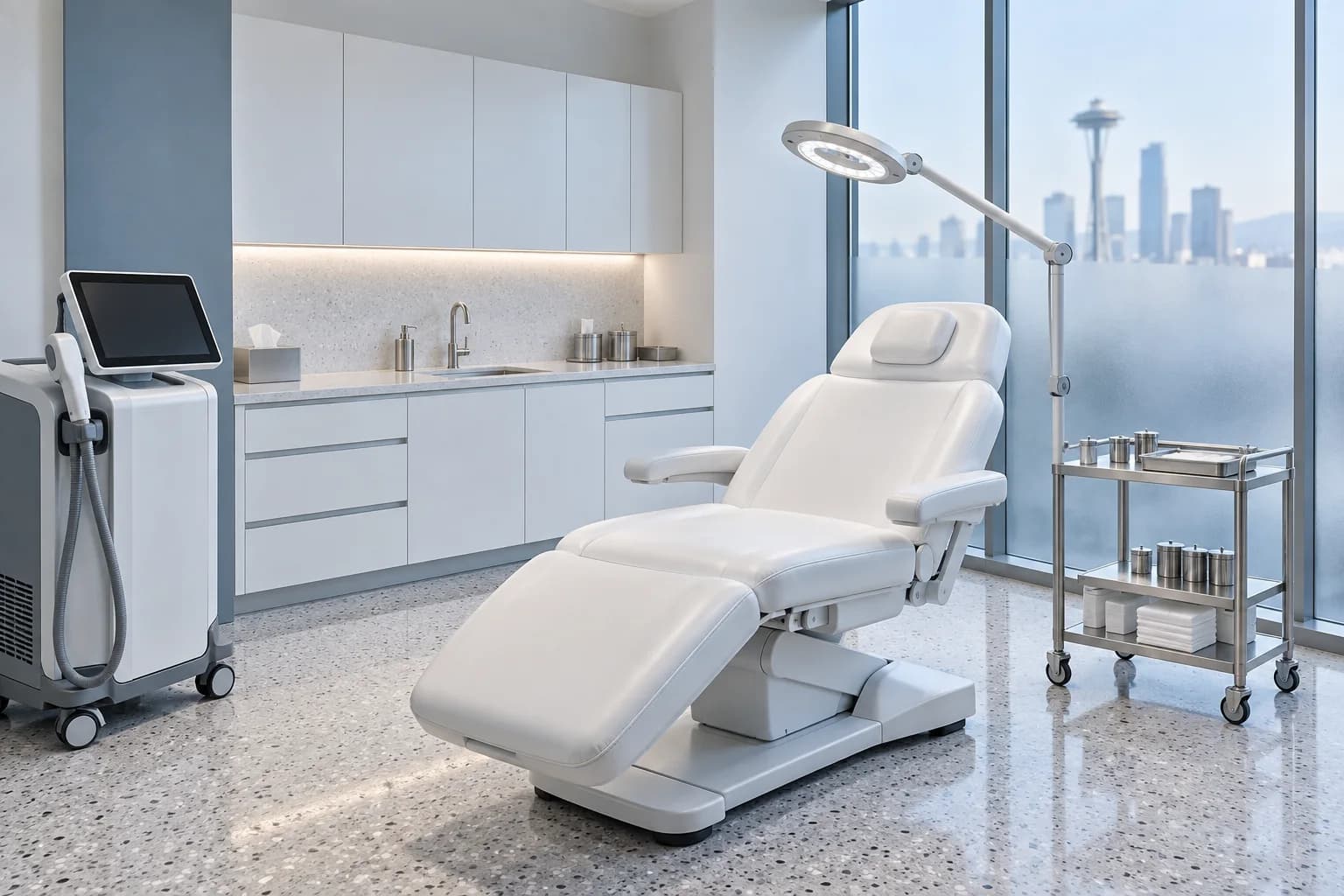
The clinic / Imagined in Seattle
Aesthetic medicine should be understandable.
The setting, the assessment, and the way a plan is explained all contribute.
The Contour & Light approach
Texture, expression, and changes in tone need different conversations. A useful assessment explains what a treatment could address—and what needs a different kind of attention.
A recommendation includes risks, limitations, practical recovery needs, and cost. There should be enough detail to compare options, including the option to do nothing.
Preparation, consent, aftercare, and review are part of the same clinical process. A visitor should know what happens next and who is responsible.

A principle of the practice
“The right treatment starts with a clear reason for choosing it.”
A fictional clinic. A concrete standard of care.
The person behind the plan
Imagined clinical lead
Evelyn is the fictional practitioner at the center of this concept. Her profile represents a specific professional approach: assess carefully, explain the rationale, and treat the review as part of the plan.
A real version of this page would include verified qualifications, a current professional license, relevant treatment experience, and a clear account of clinical oversight.
From assessment to review
Each stage should leave you better informed about the next decision.
A qualified practitioner reviews your concern, relevant history, and skin in person. The assessment comes before the treatment choice.
Understand the options, risks, alternatives, and full estimate. Take time to decide; an assessment does not commit you to treatment.
Confirm the agreed plan, consent, and comfort measures. You should know who is treating you and how to pause or ask a question.
Leave with written aftercare, a contact route, and a review plan. Further treatment is a new decision, not an automatic next step.
After the appointment
A real practice should provide procedure-specific written instructions, a contact route for questions, urgent-care guidance, and a review plan. Ask for these before you consent, not as an afterthought.
Prepare with Skin Notes
The next step is an assessment
Explore your options with a qualified practitioner. Start with a concern, not a procedure.
Book a consultationExplore the local demonstration form