What are we actually trying to address?
Texture, a scar, and a change in skin color may look related in a mirror but need different assessment. Begin by asking the clinician to explain the concern they see, what they can and cannot establish at this appointment, and whether anything needs medical investigation before cosmetic treatment.
A treatment menu can help you learn the vocabulary. It cannot tell you which option is suitable. Neither can a photograph, a skin quiz, or a category label selected online.
Which technology—and which version of it?
Conventional microneedling creates controlled punctures with fine needles. Radiofrequency microneedling adds energy and is a different procedure. A recommendation should make that distinction explicit rather than describing both simply as “microneedling.”
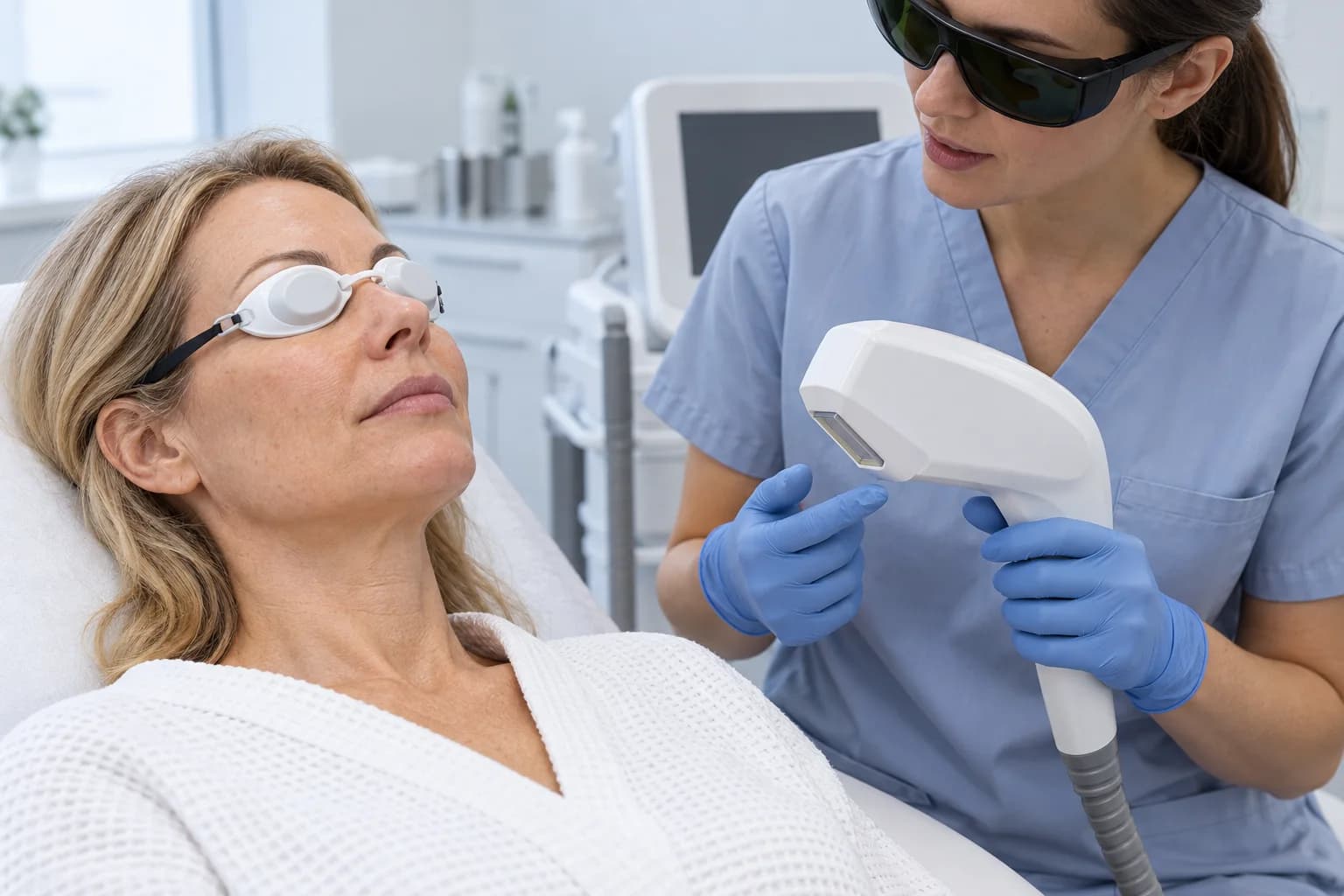
Light-based treatments also cover different technologies. IPL uses broad-spectrum pulses; lasers use more specific wavelengths. Even within a category, the device and intended approach matter. Ask what is proposed and why that specific approach is relevant to the concern.
How does my skin change the discussion?
Ask how skin tone, the history of the concern, recent sun exposure, previous procedures, and patterns of healing affect the options. Relevant health information belongs in a private clinical assessment, not in an ordinary website inquiry.
Ask the practitioner about experience with skin like yours. If the answer is a general promise that a device is suitable for everyone, request a more individual explanation. The decision should be about your circumstances, not the popularity of the equipment.
What would the recovery plan involve?
Instead of asking only for a number of downtime days, ask what you may need to do differently. Discuss your usual skincare, work, exercise, sun exposure, and upcoming events. The practical requirements may matter more than whether someone describes the recovery as “minimal.”
Request written instructions, the expected review process, and signs that should prompt contact. Ask how discomfort and possible complications are handled. Do not treat an online article as a substitute for the instructions for your actual procedure.
How will we decide whether to continue?
Before agreeing to a series, ask what the first decision commits you to and how the plan will be reviewed. What would count as a useful change? What would make the clinician adjust the approach, stop, or recommend something different?
Ask to understand the limits of any example photographs. Comparable lighting, the procedure performed, the timeline, and other treatments all affect how an image should be interpreted. A striking photograph is not a prediction of your result.
General education, not individualized medical advice. This article is demonstration content and requires approval by a qualified clinician before use by a real clinic.
Reference: American Academy of Dermatology: cosmetic treatment safety (opens in a new tab)↗